There is a moment when skincare becomes something more than simply applying a cream to the face.
It becomes a ritual.
For centuries, humans have turned to plants, flowers, oils, minerals and aromatic substances to care for the body and create moments of connection with themselves. Long before the modern beauty industry, people were creating botanical preparations from the natural materials available around them.
This is one of the ideas that inspires Alchemical Skincare.
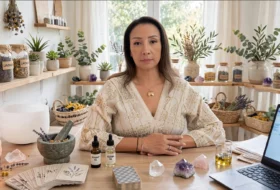
At Holistic Alchemy Arts Institute, we approach beauty as a meeting point between botanical knowledge, traditional practices, sensory experience and conscious self-care.
The word alchemy is important here.
Alchemy was historically concerned with transformation: the transformation of materials, but also the transformation of the person undertaking the work.
In our approach to skincare, the skin becomes part of that experience.
From ingredient to ritual
Consider something as simple as a botanical oil.
An oil can be used as a cosmetic preparation, but the experience can also involve choosing the botanical, preparing an infusion, observing its aroma and color, applying it slowly and creating a moment of intentional self-care.
The physical preparation and the ritual surrounding it become part of the experience.
This does not mean that every traditional beauty preparation is automatically safe or effective. Natural does not necessarily mean harmless, and botanical ingredients can cause irritation, allergy or contamination if they are not prepared and stored properly.
That is why our exploration of natural skincare combines traditional knowledge with responsible cosmetic practices.
The language of the botanical world
One of the most fascinating aspects of natural skincare is the diversity of materials available to us.
Botanical oils
Carrier oils such as jojoba, rosehip, argan, sweet almond and sunflower oil can be used as components of cosmetic preparations.
Each has its own texture, sensory characteristics and cosmetic properties.
The goal is not simply to find the “most powerful” oil.
It is to understand which material is appropriate for a particular preparation and how it behaves on the skin.
Herbs and flowers
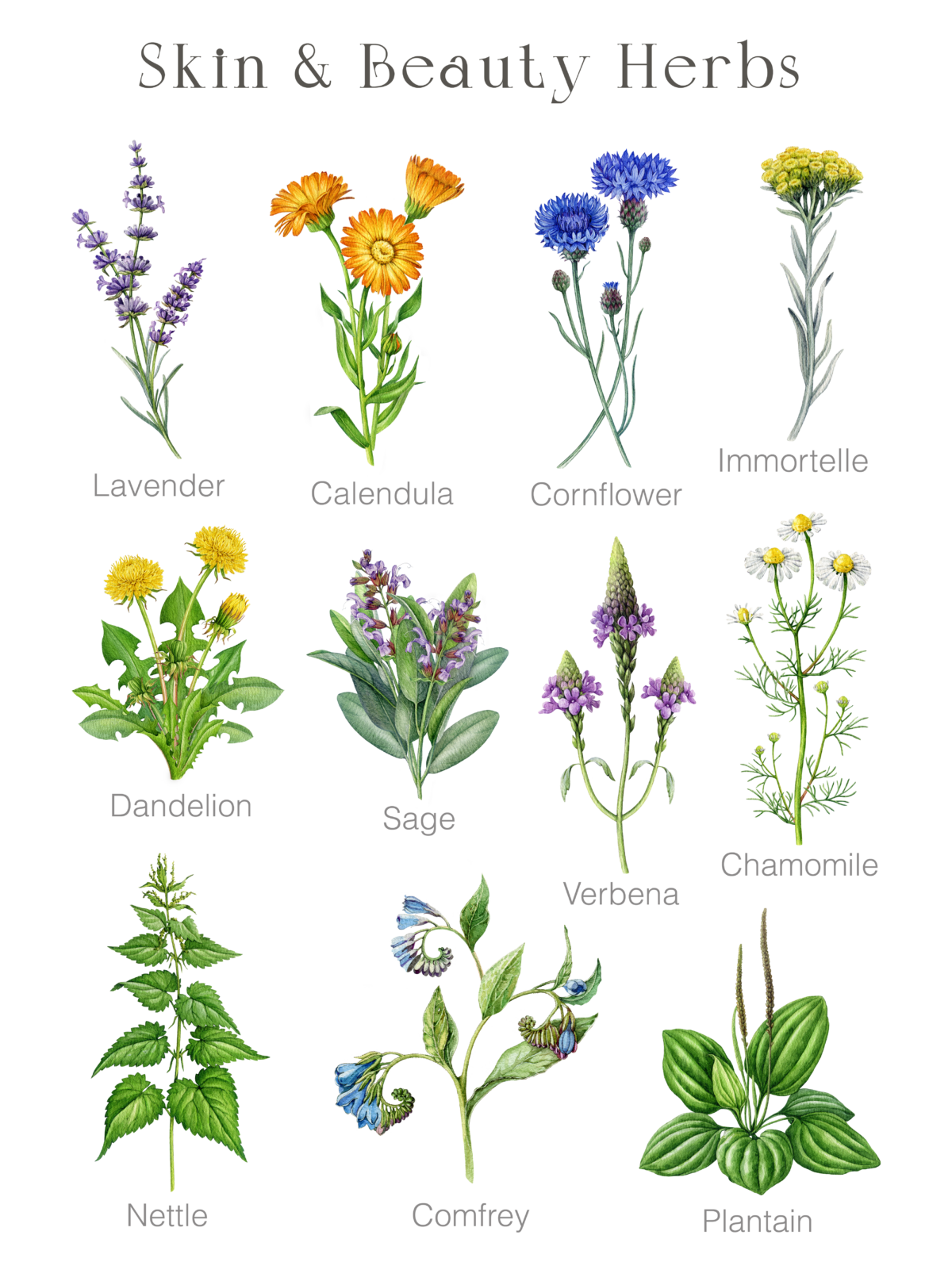
Plants such as calendula, lavender, chamomile and rosemary have long histories of use in traditional preparations.
They can inspire oils, baths, aromatic preparations and other cosmetic rituals.
But there is an important distinction between appreciating the traditional use of a plant and making a medical claim about it.
Our goal is to explore the botanical tradition without turning traditional beliefs into promises of medical treatment.
Clays and minerals
Clay introduces another dimension to natural skincare.
Different clays have different colors, textures and mineral compositions, making them fascinating materials for cosmetic masks and sensory rituals.
Here, color itself becomes part of the experience.
This is where our exploration can eventually connect with one of the other branches of holistic practice: chromatic symbolism.
The Alchemist’s principle: transformation
Perhaps the most beautiful concept we can borrow from alchemy is transformation.
A raw botanical becomes an infusion.
An infusion becomes an ingredient.
An ingredient becomes a formulation.
And a formulation becomes part of a personal ritual.
The transformation is not only in the material.
It is also in the person.
Taking ten minutes to cleanse your face, prepare your skin and consciously apply a botanical oil can create a completely different experience from rushing through a skincare routine without awareness.
The product has become a ritual object.
Creating your own botanical skincare
As we begin this journey, we will explore simple preparations that can be made at home using appropriate cosmetic ingredients.
We will also learn an equally important lesson:
A homemade preparation and a commercial cosmetic are not the same thing.
A preparation made in your kitchen may be appropriate for personal experimentation when the ingredients, method and storage are suitable.
A product intended to be sold to the public requires a much higher level of responsibility.
Water-based products, for example, can provide an environment for microbial growth. Preservative systems, packaging, stability and formulation are not details that should be improvised when creating products for consumers.
We will take the principles we explore here and I will tell you the history of how I transformed them into professionally developed cosmetic products.
From the home apothecary to the Alchemical laboratory
Our first step is education.
We will learn about botanical ingredients.
We will explore traditional preparations.
We will experiment responsibly with simple cosmetic rituals.
And we will study why certain ingredients are used in modern formulations.
Then comes the next stage:
formulation.
Our objective is to develop a collection that preserves the spirit of botanical alchemy while applying contemporary standards of cosmetic formulation and safety.
The result will not simply be “natural products.”
It will be Alchemical Skincare:
products inspired by nature, ritual and transformation, developed with intention and designed for modern life.
This is the beginning.
Welcome to the Alchemist’s Apothecary.
Holistic Alchemy Arts Institute
Where ancient wisdom meets the art of transformation.